 New England Biz Law Update
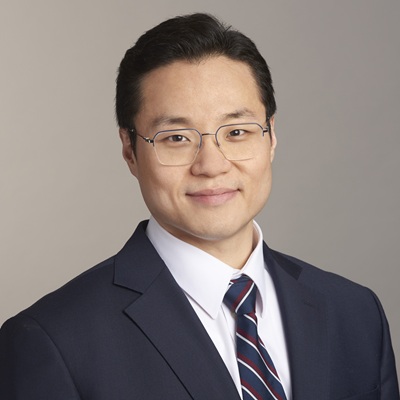
Attorney Jin Ji Kim
Corporate flips—often called “US flip‑ups” or redomiciliations—have become a key tool for international companies seeking serious access to US capital, talent, and exit markets. For foreign founders, combining a flip with a Massachusetts‑centered operating base offers a way to align with US policy priorities while plugging into one of the world’s deepest innovation ecosystems.
Onshoring Momentum and Policy Backdrop
A corporate flip typically involves creating a new US holding company and having existing foreign shareholders exchange their equity for shares in that US parent, so the non‑US operating company becomes a wholly owned subsidiary. This preserves commercial continuity while shifting the group’s corporate “center of gravity” into the United States. Historically, corporate inversions moved US companies abroad for tax reasons, but post‑2017 US tax reform lowered the federal corporate rate and narrowed the spread with traditional low‑tax jurisdictions, making inbound flips more compelling. In addition, the current policy environment has renewed its focus on bringing companies, IP and jobs “back home,” with incentives aimed at domestic manufacturing, R&D and investment, so international firms willing to flip into a US parent and build substantive US operations are well positioned to qualify for such US-centric benefits.
Capital, Valuation, and Funding Rounds
The primary strategic benefit of a US flip is dramatically improved access to capital. US venture funds, growth equity, and crossover investors strongly prefer US‑style entities because they understand the governance norms, rely on established corporate jurisprudence, and structure their own funds around holding US C‑Corp equity. Cross‑border advisory groups routinely describe the flip to a US parent as the default path for foreign startups that intend to raise institutional capital in the US.
Hard numbers support the idea that tapping US capital markets can materially affect valuation. Recent data show that US startups tend to raise at significantly higher valuations than peers in many foreign markets, with some analyses placing the median US early‑stage (Series Seed and Series A) valuation roughly 30–40 percent above comparable European levels, alongside higher average round sizes across stages. Academic work on foreign firms listing in the US finds a persistent “US listing premium,” with cross‑listed or US‑listed foreign companies trading at higher valuations than similar firms that remain listed only at home. While a flip itself does not automatically add a fixed percentage to valuation, it is what allows foreign startups to raise rounds in the US market where higher benchmarks apply. Over the past decade, more than 130 European companies have effectively “moved” to US markets via IPOs, direct listings, SPAC mergers, or primary‑listing shifts, many paired with some form of redomiciliation.
Talent, Governance, and Equity Incentives
A flipped US company also gains a more effective platform for recruiting and retaining talent. US‑style stock option and RSU plans can be implemented in a familiar framework for employees, executives, and directors, making it easier to compete for technical and managerial talent in sectors like AI, biotech, and robotics. Governance becomes straightforward for US‑trained board members and investors, who are accustomed to specific fiduciary standards, committee structures, and protective provisions, facilitating later‑stage rounds and exit processes.
These structural advantages align with the reality that foreign and immigrant founders are already central to US venture narrative. A study by the National Foundation for American Policy found that 55 percent of US billion‑dollar startups have at least one immigrant founder, and around 22 percent of these founders first came to US as international students— many clustered in hubs like Boston and Cambridge. A corporate flip, especially one combined with a Massachusetts presence, gives these teams a corporate shell that matches already-familiar markets, investors, and talent pools.
Legal Steps and Typical Hurdles
For an international company targeting Massachusetts as its primary US base, the flip process usually unfolds in several phases. First, counsel conducts a pre‑flip assessment: mapping the existing cap table and shareholder rights, identifying sensitive contracts and regulatory licenses, and obtaining coordinated tax advice in both the home jurisdiction and the US to avoid home‑country exit tax and manage US inbound issues around IP and transfer pricing.
Second, the company forms a US parent with “venture‑ready” governance and an equity plan, then implements a share‑for‑share exchange, cross‑border merger, or similar reorganization so foreign shareholders receive US parent shares and foreign entity becomes a subsidiary. In parallel, the company reviews contracts and regulatory consents, securing third-party approvals where necessary and making required regulatory disclosures. If a financing is tied to the flip, the company prepares US‑style financing documents and ensures compliance under US federal and state securities laws and any necessary home‑country filings for legacy investors. Finally, the flipped parent registers to do business in Massachusetts, establishes local offices or labs, and implements Massachusetts‑compliant employment and equity documentation, following the state’s rules on non‑competes, wage‑and‑hour law, and equity taxation. Ongoing corporate discipline—board minutes, stock ledgers, and annual filings—helps preserve the governance and investor‑protection benefits that safeguard the valuation premium.
Massachusetts as a Unique Landing Zone for Onshore Flips
Within the US, Delaware still dominates as forum du jour for flips because of its popularity among underwriters and acquirers, its alignment with standard NVCA-style documents, and decades of case law. However, Massachusetts stands out as a forum state where structural advantages translate into measurable outcomes. Indeed, Massachusetts consistently ranks among the top US states for total venture capital raised annually despite its modest population, and recent analyses show that companies headquartered in the Commonwealth now have roughly a 4.1 percent probability of going public within 10 years, distinctly higher than comparable probabilities for California and New York. This IPO track record reflects a deep bench of experienced operators, repeat founders, and advisors who know how to scale from seed to exit – an ecosystem especially valuable for international startups.
Massachusetts also boasts a dense innovation infrastructure. Billions of dollars flow annually into tech and life‑science ventures, and Massachusetts is one of a small group that regularly attracts more than one billion dollars in VC funding each year. Institutions and newly launched centers for academic inventors provide grants, seed capital, and structured support for commercializing research from universities such as MIT and Harvard, giving flipped companies immediate access to a sophisticated pipeline of IP, talent, and non‑dilutive capital.
For international companies contemplating a corporate flip, choosing Massachusetts as its primary US beachhead is therefore not just about meeting investor expectations. It is a decision to anchor the business into a demonstrably fertile ecosystem – one with higher IPO probabilities, deep venture funding, and a long track record of immigrant‑founded success.
Jin Ji Kim is an Associate in the Corporate Department at Sheehan Phinney.